“The pidgin talk the youthful use,
Bypasses conversation,
I can’t believe the code they choose
Is a means of communication.”
complained Odgen Nash in the 1950’s, of a generation that is probably in its dotage now. Yet, these words accurately depict the present texting generation of the 21st century, communicating digitally, well, with their digits. We all, including Nash’s ‘youthful’ generations, bemoan that technology has degenerated language, as the dexterous youth thumb texterous messages. We all whine that English is a mess. But can we really mess up a language?
Rite Spelling
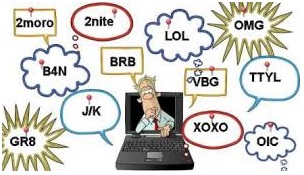
Maybe we can mess spellings up. Gr8 instead of great, LOL and J instead of grammatically and emotionally correct phrases may proclaim inherent doom of spellings; but then, what are spellings? Spellings are nothing but agreed upon coded symbols that follow certain agreed upon (or constantly evolving) rules. So, if for 500 years we have agreed that ‘a-p-p-l-e’ is a red round fruit, why does the same arrangement of those letters now remind us of a multinational conglomerate whose products we long for, and use, (to further mess up spellings J)? Writing is an agreed upon system of symbols, and like its spoken counterpart, should be able to change, adapt, adopt, evolve and become user-friendly.
Textlish
Just as we adopt new words, to accommodate new inventions and conventions, (the Oxford English Dictionary accepted ‘juggernaut’ as an English word decades ago, and has accepted ‘jugaad’ in 2015), why can’t we adopt new spellings and symbols? GB Shaw had pointed out, almost a century ago, that we need to readjust the English alphabet to accommodate its already confusing spelling system. Maybe technology is paving the way for that. All across the globe, time-pressed, economically aware (shrt txt forms began bcos you paid for every letter –remember telegrams?), and digitally endowed youth text ‘CUL8r’ and ‘H&K’, creating a new unifying code of communication. Technology has brought about a cultural and corporate blend, so why should technology not pave a path for Textlish, a unified spelling-symbol system? And who knows, maybe in a few generations, we will be reading all our English texts in Txt Englsh!
English in Education
As educators, however, and as users of any language, we do have to agree upon the aforementioned rules of spellings, or there will be mayhem, misunderstanding and miscommunication. The challenge is not only to update and upgrade ourselves as the ‘youthful’ keep on changing the spelling code and system, but to help students understand situation and context, and use the correct spellings (or the creative ones) in the right place. If we can know when to use the correct ‘code’, we will be enriching our writing and language even more; and isn’t that how languages and language users evolve?
Alokparna Das
Head of Content, TTF