

- 2 Days – Orientation
- 8 days – Professional Development Workshop for teachers
- 8 days – School Based Support (2 rounds, with 4 days each for a batch of 20 teachers

The Power of Planning
05
Aug
Posted by: Rashmi Sethuram
Category:
The Power of.....
No Comments

“Failing to plan is planning to fail!”
I remember reading this quote in the coordinator’s room when I started my career 22 years ago. She was particular that our lesson plan books were on her table at the start of every week. I asked for a template considering it was my first time ever working in a school; she handed over her own lesson plan book nodding her head in frustration, “Why did we hire you if you don’t even know how to plan a lesson???”
I pored over her lesson plans but ended up more befuddled than before! All it had was content that was directly lifted from the text book. I trudged back to her room and mustered up the courage to ask her if I could just mention the page and paragraph numbers instead of duplicating the same content. She rained down a few warnings and got me to do ‘copy-writing’ work on the pretext of lesson planning!
Over time, I realised that I could just copy and paste the content into my lesson plans (thanks to the internet!). My coordinator praised me for the perfectly formatted lesson plans and I thought I was a lesson planning ninja! It was another matter that my actual lessons and my lesson plans were poles apart; after all, lesson planning was but a formality!
When I shifted to another school, the culture shock was unbearable! Here teachers were required to do curriculum planning, annual planning, topic planning, assessment planning and so on and so forth! My cut-copy-paste skills seemed sorely inadequate in this setting and I muttered in frustration, “Why did I join this school when all they want me do is planning???”
I joined the first planning meeting with great trepidation! The major agenda was framing departmental goals for the academic year. Everyone finally agreed that helping students develop their unique voice in writing and exposure to contemporary literature would be the main focus of our department. As much I enjoyed this process, I couldn’t quite suppress that little voice in my head saying, “All this looks good on paper; after all lesson planning is but a formality!”
We, next set our sights on curriculum planning. The entire department discussed each subject strand and collaboratively decided the sub-skills/ topics that students were ready for in each grade. This granular approach to different strands and planning for progression of skills across different grades was eye opening to say the least!
This was followed by a spate of annual planning activities – deciding topics for each month (for every grade) and allocating requisite number of periods for each topic.
Before the topic planning exercise began, the department made a list of best practices/learning approaches and assessment strategies that worked the previous year/ were introduced in professional development workshops. Each topic plan developed was reviewed by teachers handling the grade level before the coordinator gave it a once-over.
Before I entered my first class (a grade 9 literature class), I was armed with a detailed topic plan which included specific learning objectives, flow of the content, the teaching-learning processes, key questions and continuous assessments. I was prepared not just with the content for the day, but with grouping strategies, a variety of learning aids and resources for continuous assessment.
Of course, I had my work cut out for me in terms of building a rapport with my new students; but, I had clear goals and a definite pathway. Having a well-defined plan helped me recognise what I was doing right and where I was, perhaps, faltering. This reflection and consequent re-calibration went a long way in ensuring that both my students and I enjoyed success in the classroom! The little voice in my head couldn’t stop saying,”Aha!”
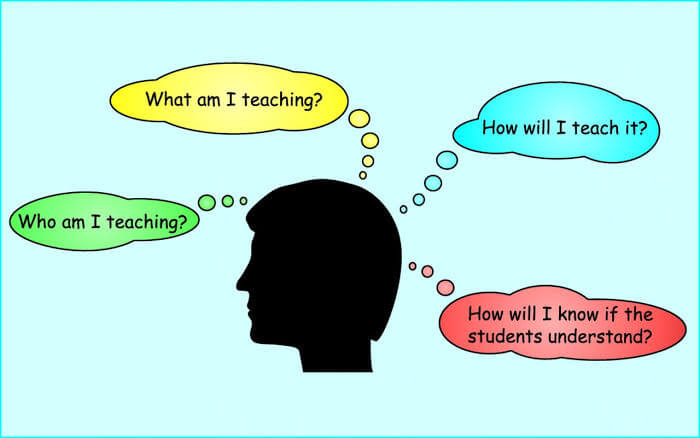
When I look back at these experiences, I am convinced that it is a school’s attitude towards planning that plays a crucial role in the way a teacher approaches it. The school needs to provide the space, time, guidance and support to every teacher to answer these questions – What do we want our students to learn? What experiences can we provide to help them learn best? How will we know if they have learned it? The school’s role becomes even more significant in the review, implementation and monitoring of these plans.
At TTF, we help drive professional development of teachers from public schools, mid-end and high-end schools. One thing we see in common is the initial teacher scepticism towards planning. Teachers claim “We know how to teach from experience!” or “Doesn’t planning curb spontaneity?”. As a teacher-educator, I have seen how planning can be a powerful tool for achieving organisational, professional and personal success. I find that teachers who invest time and energy on planning have a greater sense of clarity, control and creativity. They tend to drive their own learning and take pro-active measures to improve performance. There is less stress, more collaboration and enhanced decision making in schools that take planning seriously.
Education research corroborates this. In his ground-breaking study “Visible Learning”, John Hattie has ranked 256* influences that are related to learning outcomes. The average effect size of all the influences he studied was 0.40 and therefore this is considered the ‘hinge point’- anything greater than this can accelerate learning. According to his study, ‘Planning and Prediction’ has an effect size of 0.76 which makes it a very significant factor in student success! (Source : Visible Learning, 2009, *This number is continuously updated).
Good planning in education empowers teachers, enhances teaching effectiveness, ensures a coherent approach to teaching-learning across the board, addresses educational disparities, and supports robust monitoring and evaluation processes. Pablo Picasso’s iconic words sum up why each educator must pay attention to planning, “Our goals can only be reached through a vehicle of a plan, in which we must fervently believe, and upon which we must vigorously act. There is no other route to success.”
Sandhya Shivaprasad
Head, Content and Training
The Teacher Foundation